
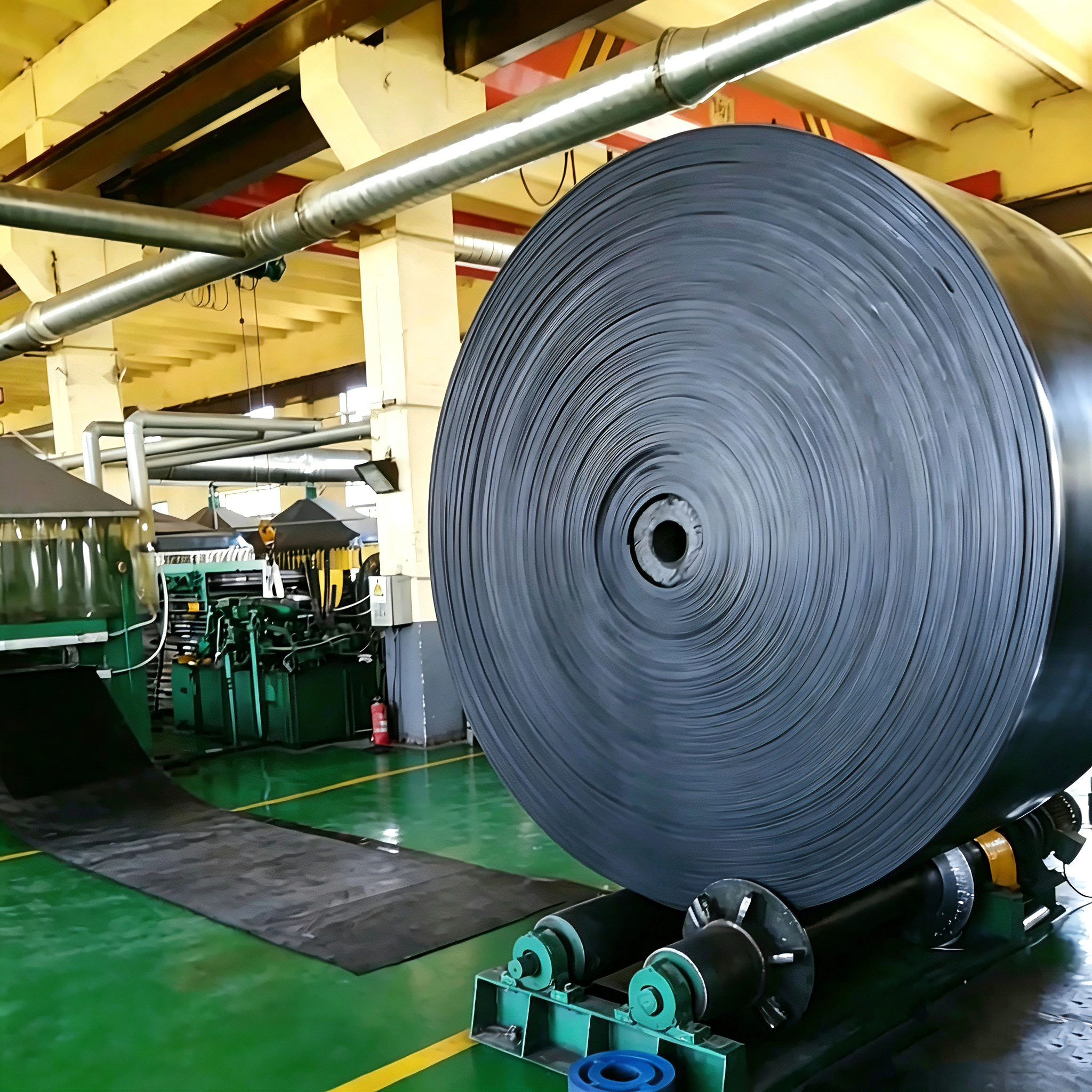
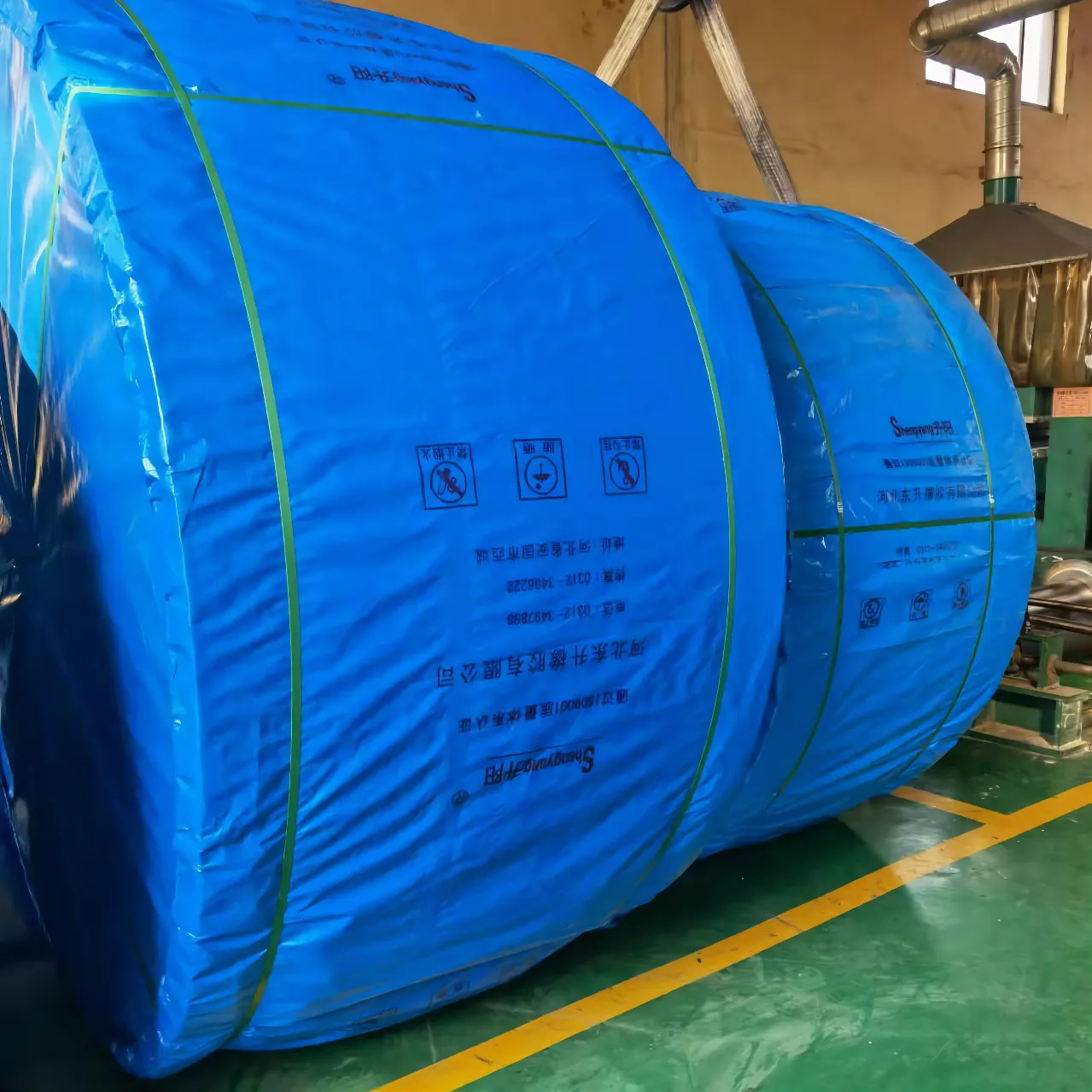
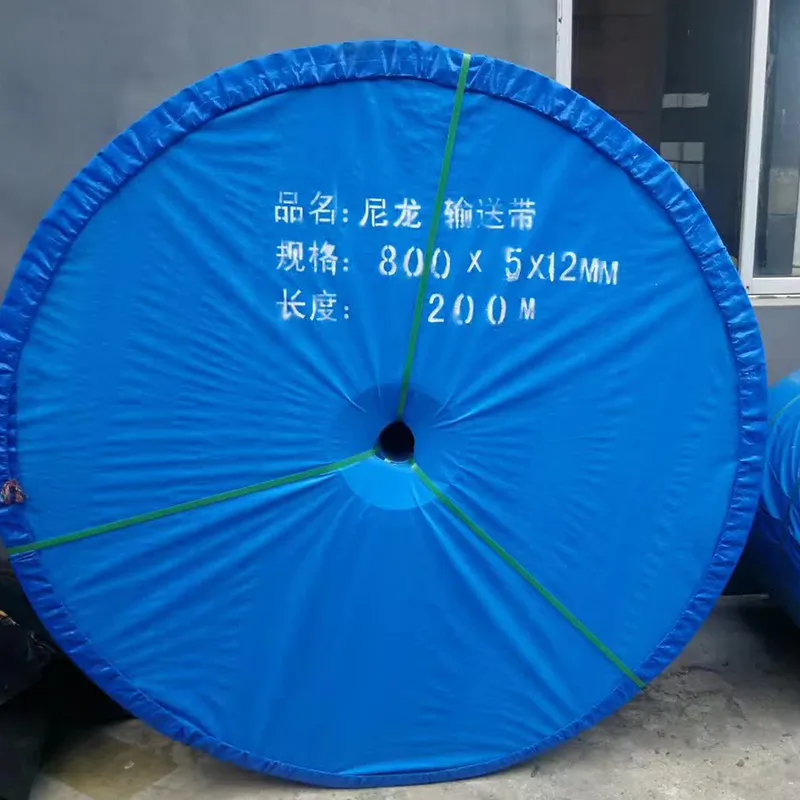


Nylon Conveyor Belt Features
High Tensile Strength
Nylon fabric provides excellent tensile strength, allowing the conveyor belt to carry heavy materials without easy deformation. This makes the belt ideal for mining, quarry, cement, and construction industries.
Benefits:
- Supports heavy loads
- Suitable for long-distance conveying
- Reduces belt stretching during operation
Excellent Impact Resistance
Nylon conveyor belts can absorb strong impacts from falling materials. Therefore, they work well in environments where large or sharp materials are loaded onto the belt.
Suitable Materials:
- Stone
- Coal
- Sand
- Ore
- Gravel
Good Flexibility and Troughability
The belt body is soft and flexible, which helps the conveyor system form a better trough shape during operation. As a result, materials stay stable on the belt and are less likely to spill.
Advantages:
- Smooth running
- Better material stability
- Lower energy consumption
Strong Wear Resistance
The rubber cover and nylon fabric structure provide strong abrasion resistance. Even in harsh working conditions, the belt can maintain a long service life.
Ideal for:
- Continuous conveying systems
- High-friction environments
- Heavy industrial production lines
Excellent Adhesion Between Layers
The nylon fabric layers bond tightly with the rubber covers, helping prevent separation or delamination during long-term use.
Key Advantages:
- Longer belt lifespan
- More stable performance
- Reduced maintenance costs
Nylon Conveyor Belt Applications
Mining Industry
Nylon conveyor belts are widely used in mining operations because they can handle heavy and abrasive materials efficiently.
Common Uses:
- Coal transportation
- Iron ore conveying
- Stone crushing plants
- Quarry material handling
Cement Industry
Cement factories often use nylon conveyor belts to transport raw materials and finished products.
Conveyed Materials:
- Limestone
- Cement clinker
- Powder materials
- Sand and gravel
Power Plants
Thermal power plants use nylon conveyor belts for coal conveying systems because the belts can operate continuously under demanding conditions.
Features Needed:
- High load capacity
- Stable operation
- Long-distance transportation
Port and Harbor Material Handling
Ports require reliable conveyor systems for loading and unloading bulk cargo. Nylon conveyor belts provide efficient and stable transportation for large material volumes.
Suitable Cargo:
- Grain
- Fertilizer
- Coal
- Bulk minerals
Construction Industry
Construction sites use nylon conveyor belts to move aggregates, sand, and building materials quickly and efficiently.
Advantages for Construction:
- Durable performance
- Strong impact resistance
- Easy installation
Advantages of Nylon Conveyor Belts
Long Service Life
Because of their wear resistance and strong internal structure, nylon conveyor belts can work for long periods with minimal damage.
Cost-Effective Solution
Although nylon conveyor belts offer high performance, they are also economical for many industrial applications due to lower maintenance and replacement costs.
Stable Operation
The belt runs smoothly with low vibration and reduced noise, helping improve overall production efficiency.
Easy Maintenance
Nylon conveyor belts are easy to clean and maintain, reducing downtime in industrial operations.
How to Choose the Right Nylon Conveyor Belt
Consider Material Type
Different materials require different belt strengths and cover thicknesses.
Example:
- Sharp materials → thicker rubber cover
- Heavy materials → higher tensile strength
Check Working Environment
Temperature, humidity, and chemical exposure can affect belt performance.
Important Factors:
- High temperature resistance
- Oil resistance
- Abrasion resistance
Select Proper Belt Width and Length
The belt size should match the conveyor system and material capacity requirements.
Choose the Correct Belt Structure
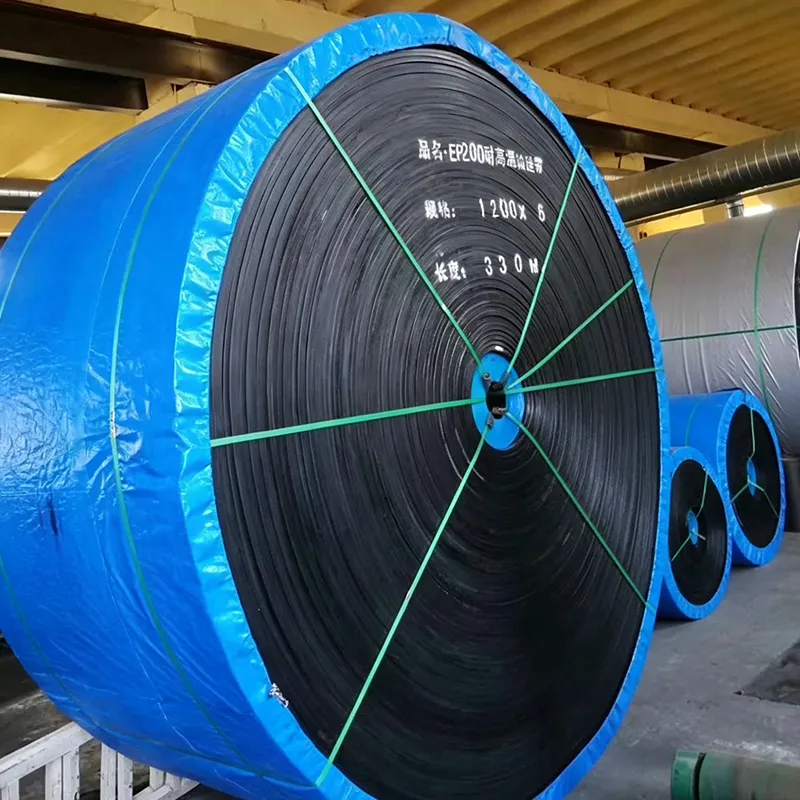
Common nylon conveyor belt types include:
- NN100
- NN150
- NN200
- Multi-ply nylon belts
Higher ply ratings usually provide stronger load capacity.
Copyright © 2026 上海伊胶特贸易有限公司 Ltd. All Rights Reserved. POWERED BY WEIMOBTRADE
